
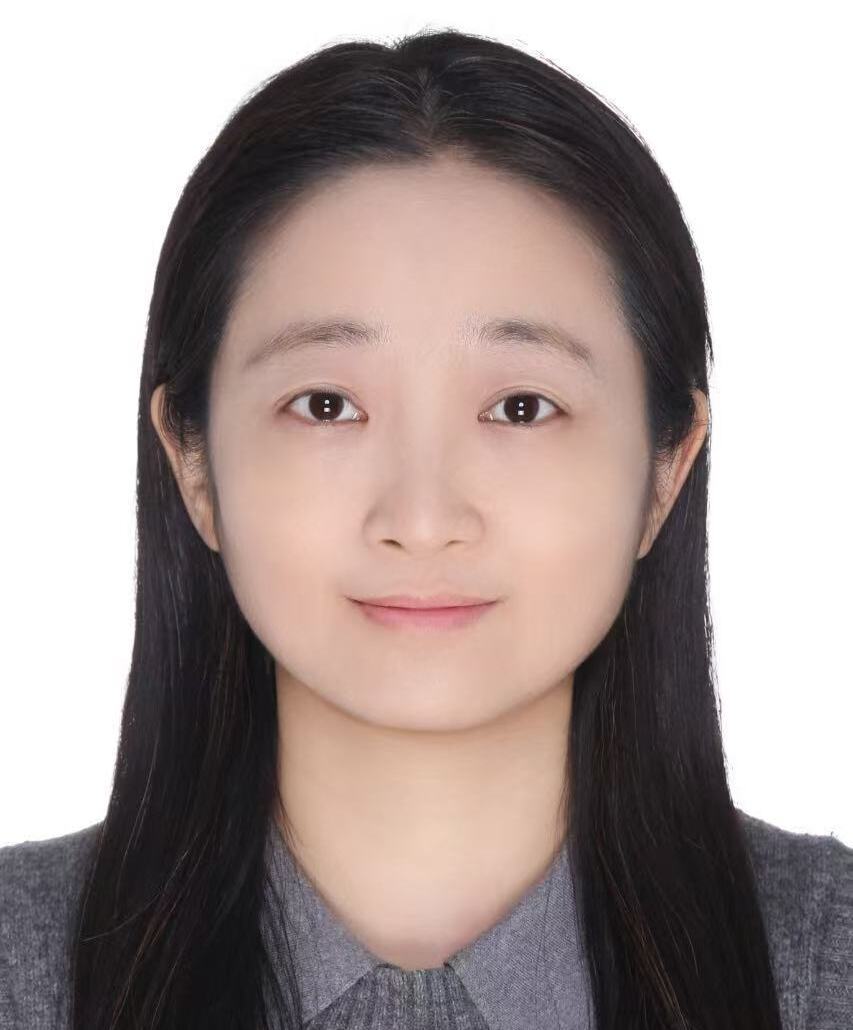
Biography
• Sept. 2008 – July 2012, Department of Psychology, University of York, UK
PhD in Philosophy (Psychology)
• July 2012 – Present, NACN Laboratory (Neuropsychology and Applied Cognitive Neuroscience), Institute of Psychology, Chinese Academy of Sciences
Postdoctoral Research Fellow, Assistant Professor, Associate Professor
Research Interests
Dr Tianxiao Yang’s research focuses on future-oriented cognition, encompassing processes like prospective memory, affective forecasting, and episodic future thinking. A central aim is to understand their lifespan development, clarify underlying neurocognitive mechanisms, and identify pathways for optimization.
Recent Publications
Allen, R. J., Waterman, A. H., Yang, T., & Jaroslawska, A. J. (2023). Working memory in action: Remembering and following instructions. In R. H. Logie, Z. Wen, S. E. Gathercole, N. Cowan, & R. W. Engle (Eds.), Memory in science for society: There is nothing as practical as a good theory. Oxford University Press. https://doi.org/10.1093/oso/9780192849069.003.0010
Chen, X., Liu, L., Wang, Y., Yang, T., Huang, J., Li, K., Zeng, Y., Cheung, E., Shum, D., van Amelsvoort, T., & RC, C. (2018). Neural correlates of the effect of implementation intention on prospective memory. PsyCh Journal.
Chen, X., Wang, Y., Wang, Y., Yang, T.-x., Zou, L.-q., Huang, J., Li, F.-h., Chen, A., Wang, W.-h., Zheng, H.-f., Cheung, E. F. C., Shum, D. H. K., & Chan, R. C. K. (2016). Neural correlates of prospective memory impairments in schizophrenia. Neuropsychology, 30(2), 169-180. https://doi.org/10.1037/neu0000225
Gao, Y., Wang, Y., Huang, Y., Yan, C., Huang, J., Wang, K., Yao, Z., Lui, S. S. Y., Yang, T., & Chan, R. C. K. (2026). Affective forecasting in people with autistic traits, social anhedonia, and subthreshold depression: a multi-method study. European Archives of Psychiatry and Clinical Neuroscience. https://doi.org/10.1007/s00406-026-02281-3
Lui, S., Yang, T., Ng, C., Wong, T., Wong, J., Ettinger, U., Cheung, E. F. C., & Chan, R. C. K. (2018). Following instructions in patients with schizophrenia: The benefits of actions at encoding and recall. Schizophrenia Bulletin, 44(1), 137-146. https://doi.org/10.1093/schbul/sbx026
Lui, S. S. Y., Leung, S. S. W., Yang, T.-x., Ho, K. K. Y., Man, C. M. Y., Leung, K. H. L., Wong, J. O. Y., Wang, Y., Cheung, E. F. C., & Chan, R. C. K. (2021). The benefits of emotionally salient cues on event-based prospective memory in bipolar patients and schizophrenia patients. European Archives of Psychiatry and Clinical Neuroscience, 271, 1503-1511. https://doi.org/10.1007/s00406-021-01235-1
Su, X.-m., Yang, T.-x., An, F.-s., Yuan, C.-w., Zuber, S., Ren, Q., Wang, Y., & Chan, R. C. K. (2025). Evaluating everyday prospective memory in school-age children through parent- and self-reports: Validating questionnaires and examining relations to executive functions and autistic traits. Lifespan Development and Mental Health, 1(2), 10007. https://doi.org/10.70322/ldmh.2025.10007
Su, X.-m., Yang, T.-x., Zuber, S., Li, S.-b., Yuan, R.-m., Yuan, C.-w., Yang, H.-x., Wang, Y., & Chan, R. C. K. (2024). Event-, time- and activity-based prospective memory in children with higher autistic traits. Research in Autism Spectrum Disorders, 118, 102498. https://doi.org/10.1016/j.rasd.2024.102498
Wang, Y., Yang, T., Su, L., Chao, Y., Wang, Y., Huang, J., Fan, M., Yin, D., Jin, Z., Zeng, Y., Shum, D., Gur, R., & Chan, R. (2014). Neural correlates of prospective memory in individuals with schizotypal personality features [,Advance online publication]. Neuropsychology, 28(3), 373-381. https://doi.org/doi: 10.1037/neu0000035
Yang, T.-x., Allen, R. J., Waterman, A. H., Graham, A. J., Su, X.-m., & Gao, Y. (2024). Exploring techniques for encoding spoken instructions in working memory: a comparison of verbal rehearsal, motor imagery, self-enactment and action observation. Memory, 32(1), 41-54. https://doi.org/10.1080/09658211.2023.2273763
Yang, T.-x., Wang, Y., Wang, Y., Su, X.-m., Ni, K., Lui, S. S. Y., & Chan, R. C. K. (2022). Validity and normative data of the Chinese Prospective and Retrospective Memory Questionnaire (PRMQ) across adolescence, adults and elderly people. Memory, 30(3), 344-353. https://doi.org/10.1080/09658211.2021.2014526
Yang, T.-X., Xie, W., Chen, C.-S., Altgassen, M., Wang, Y., Cheung, E. F. C., & Chan, R. C. K. (2017). The development of multitasking in children aged 7–12 years: Evidence from cross-sectional and longitudinal data. Journal of Experimental Child Psychology, 161, 63-80. https://doi.org/https://doi.org/10.1016/j.jecp.2017.04.003
Yang, T.-X., Zhang, S.-Y., Wang, Y., Su, X.-M., Yuan, C.-W., Lui, S. S. Y., & Chan, R. C. K. (2023). The effect of implementation intentions on event-, time-, and activity-based prospective memory in typically developing children. International Journal of Behavioral Development, 47(2), 146-157. https://doi.org/10.1177/01650254221146420
Yang, T. (2011). The role of working memory in following instructions University of York]. York. http://etheses.whiterose.ac.uk/2117/
Yang, T., Allen, R. J., & Gathercole, S. E. (2016). Examining the role of working memory resources in following spoken instructions. Journal of Cognitive Psychology, 28(2), 186-198. https://doi.org/10.1080/20445911.2015.1101118
Yang, T., Allen, R. J., Holmes, J., & Chan, R. C. K. (2017). Impaired memory for instructions in children with attention-deficit hyperactivity disorder is improved by action at presentation and recall. Frontiers in Psychology, 8(Article 39). https://doi.org/10.3389/fpsyg.2017.00039
Yang, T., Allen, R. J., Waterman, A. H., Zhang, S., Su, X., & Chan, R. C. K. (2021). Comparing motor imagery and verbal rehearsal strategies in children’s ability to follow spoken instructions. Journal of Experimental Child Psychology, 203, 105033. https://doi.org/10.1016/j.jecp.2020.105033
Yang, T., Allen, R. J., Yu, Q., & Chan, R. C. K. (2015). The influence of input and output modality on following instructions in working memory. Scientific Reports, 5(1), Article 17657. https://doi.org/10.1038/srep17657
Yang, T., Chan, R. C. K., & Shum, D. (2011). The development of prospective memory in typically developing children. Neuropsychology, 25(3), 342–352. https://doi.org/10.1037/a0022239
Yang, T., Cui, X., Wang, Y., Huang, J., Lui, S. S. Y., Zhang, R., Cheung, E. F. C., & Chan, R. C. K. (2018). Effect of emotional cues on prospective memory performance in patients with schizophrenia and major depressive disorder. Schizophrenia Research, 201, 145-150. https://doi.org/10.1016/j.schres.2018.05.023
Yang, T., Gathercole, S. E., & Allen, R. J. (2014). Benefit of enactment over oral repetition of verbal instruction does not require additional working memory during encoding. Psychonomic Bulletin & Review, 21(1), 186-192. https://doi.org/10.3758/s13423-013-0471-7
Yang, T., Jia, L., Zheng, Q., Allen, R. J., & Ye, Z. (2019). Forward and backward recall of serial actions: Exploring the temporal dynamics of working memory for instruction. Memory & Cognition, 47(2), 279-291. https://doi.org/10.3758/s13421-018-0865-x
Yang, T., Peng, Z., Wang, Y., Geng, F., Miao, G.-d., Cheung, E. F. C., & Chan, R. C. K. (2015). The nature of prospective memory deficit in patients with obsessive-compulsive disorders. Psychiatry Research, 230, 479-486. https://doi.org/10.1016/j.psychres.2015.09.041
Yang, T., Su, X.-m., Allen, R. J., Ye, Z., & Jia, L.-x. (2022). Improving older adults’ ability to follow instructions: benefits of actions at encoding and retrieval in working memory. Memory, 30(5), 610-620. https://doi.org/10.1080/09658211.2022.2035768
Yang, T., Wang, Y.-Y., Wang, Y., Qian, Y., Cheung, E. F. C., & Chan, R. C. K. (2019). Event-, time- and activity-based prospective memory in children with ADHD. Developmental Neuropsychology, 44(8), 554-565. https://doi.org/10.1080/87565641.2019.1695801
Yang, T., Wang, Y., Lin, H., Zheng, L., & Chan, R. C. K. (2013). Impact of the aging process on event-, time-, and activity-based prospective memory. PsyCh Journal, 2(1), 63-73. https://doi.org/10.1002/pchj.19
Yao, Z., Su, X., Zhao, Y., Allen, R. J., Waterman, A. H., & Yang, T. (2026). Action-based encoding improves instruction following in children and adolescents. Behavioral sciences, 16(6), 1008. https://www.mdpi.com/2076-328X/16/6/1008
Yuan, C.-w., Yang, T.-x., Zuber, S., Su, X.-m., An, F.-s., Li, S.-b., Wang, D.-h., Wang, Y., & Chan, R. C. K. (2025). Comparing effects of episodic future thinking and cue salience to improve different types of prospective memory in typically developing school-age children. Journal of Experimental Child Psychology, 259, 106305. https://doi.org/10.1016/j.jecp.2025.106305
Zhang, Q., Jia, L. x., Cui, J. f., Ye, J. y., Liu, J. l., Lai, W. h., Shi, H. s., Yang, T. x., Wang, Y., & Chan, R. C. K. (2024). Relationship between theta/beta ratio and mind wandering in schizotypy. PsyCh Journal, 13(2), 335-339. https://doi.org/10.1002/pchj.711
Zhang, R.-t., Gao, Y., Yang, T.-x., Yan, C., Wang, Y., Lui, S. S. Y., & Chan, R. C. K. (2025). Real-life affective forecasting in young adults with high social anhedonia: An experience sampling study. Schizophrenia bulletin open, 6(1). https://doi.org/10.1093/schizbullopen/sgaf003
Zhang, R.-T., Yang, T.-X., Chen, S.-Y., Cheung, E. F. C., Barkus, E., & Chan, R. C. K. (2022). Subclinical psychopathology and affective forecasting: Role of in-the-moment feelings. PsyCh Journal, 11(3), 317-326.
Zhang, R.-t., Yang, T.-x., Wang, Y., Sui, Y., Yao, J., Zhang, C.-y., Cheung, E. F. C., & Chan, R. C. K. (2016). Structural neural correlates of multitasking: A voxel-based morphometry study. PsyCh Journal, 5, 219-227. https://doi.org/10.1002/pchj.137
Zhang, R.-T., Yang, T.-x., Wang, Z.-y., Yang, M.-y., Huang, J., Wang, Y., Lui, S. S. Y., & Chan, R. C. K. (2023). Anticipated pleasure and displeasure for future social and nonsocial events: A scale development study. Schizophrenia bulletin open, 4(1). https://doi.org/10.1093/schizbullopen/sgad024
Zhang, R., Yang, T., Wang, Y., Sui, Y., Yao, J., Yang, Z., Lui, S. Y., Cheung, E. F. C., & Chan, R. C. K. (2018). Neural correlates of future-oriented coping: Preliminary evidence from a resting-state functional connectivity study. PsyCh Journal. https://doi.org/10.1002/pchj.232
Zhang, R. t., Wang, Y., Yang, Z. y., Li, Y., Wang, Y. m., Cheung, E. F. C., Shum, D. H. K., Yang, T. X., Barkus, E. J., & Chan, R. C. K. (2020). Network structure of anticipatory pleasure and risk features: Evidence from a large college sample. PsyCh Journal, 9(2), 223-233. https://doi.org/10.1002/pchj.331
Zhang, S.-h., Yang, T.-x., Wu, Z.-m., Wang, Y.-f., Lui, S. S. Y., Yang, B.-r., & Chan, R. C. K. (2024). Identifying subgroups of attention-deficit/hyperactivity disorder from the psychopathological and neuropsychological profiles. Journal of Neuropsychology, 18, 173–189. https://doi.org/https://doi.org/10.1111/jnp.12334
Zheng, Q., Yang, T., & Ye, Z. (2020). Emotional stop cues facilitate inhibitory control in schizophrenia. Journal of the International Neuropsychological Society, 26, 286-293. https://doi.org/10.1017/S1355617719001152